Call Today for a Free Consultation

How Laser Dentistry is Revolutionizing Dental Procedures?
The world of dentistry has seen incredible advancements in recent years, and one of the most remarkable innovations is laser dentistry. This cutting-edge technology has completely transformed the way dental procedures are performed, offering numerous benefits for both dentists and patients. In this article, we will explore how this is revolutionizing dental procedures and why it has become a game-changer in the field.
The Evolution of Laser Dentistry
Before delving into the benefits, let’s first understand what it is. It is a minimally invasive technique that utilizes laser light to perform a wide range of dental procedures. It was first introduced in the 1960s, but it wasn’t until the 1990s that it gained significant recognition in the dental community.
In the early 1990s, clearance for the use of lasers for the gums was obtained. In 1990, the first pulsed laser developed specifically for the dental market was released. Then in 1997, clearance for the use of the first true dental laser for hard tissue to treat sustained tooth decay was received.
Source: https://www.biolase.com/blog/part-dental-laser-history/
Today, they are commonly used in various dental applications, including periodontal therapy, teeth whitening, cavity detection, and even oral surgery. The versatility of lasers has made them an essential tool in modern dental practices.
Benefits of Laser Dentistry
- Minimally Invasive: One of the most significant advantages of it is that it is minimally invasive. Unlike traditional dental procedures that often require cutting and sutures, lasers can target the specific area without causing unnecessary damage to surrounding tissues. This means less discomfort and faster healing for patients.
- Reduced Pain and Discomfort: The precision of laser dentistry allows for less trauma to the tissues, which results in reduced pain and discomfort during and after the procedure. This is particularly beneficial for patients who are anxious about dental treatments.
- Faster Healing: Since this technology is less invasive and causes minimal trauma, patients experience faster healing times. This means you can return to your normal activities sooner after a dental procedure.
- Reduced Bleeding: Lasers help in coagulating blood vessels during the procedure, which significantly reduces bleeding. This is a crucial benefit, especially in surgeries and periodontal treatments.
- Precision: Lasers are incredibly precise, making them ideal for delicate procedures such as gum reshaping, cavity preparation, and root canal treatments. Dentists can target specific areas without affecting healthy surrounding tissues.
- Versatility: Laser technology is versatile and can be used for a wide range of dental applications. From soft tissue procedures to hard tissue treatments, lasers have transformed the way dentists approach various oral health issues.
Common Uses of Laser Dentistry
Now, let’s explore some of the common dental procedures where this has made a significant impact:
- Gum Disease Treatment: Laser-assisted periodontal therapy (LAPT) is an effective way to treat gum disease. The laser can remove infected tissue and bacteria, promoting gum tissue reattachment and reducing pocket depth.
- Cavity Detection: Laser fluorescence technology can detect cavities in their early stages, even before they become visible on X-rays. This early detection allows for more conservative and less invasive treatments.
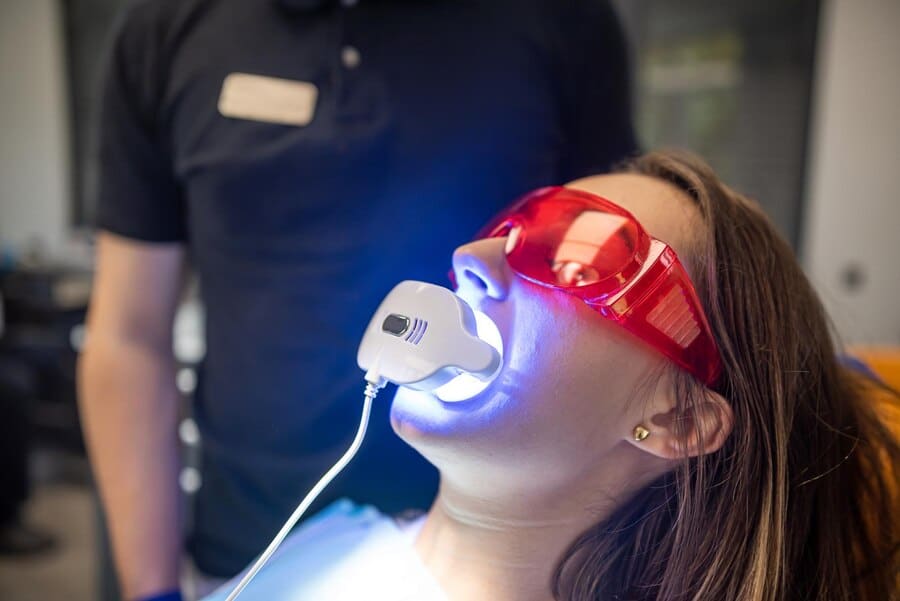
- Teeth Whitening: Laser technology is often used in teeth whitening procedures. The laser activates the bleaching agent, enhancing the effectiveness of the treatment and producing faster results.
- Oral Surgery: Lasers are used in various oral surgeries, such as removing benign tumors, reshaping the bone and gum tissue for denture fitting, and even aiding in root canal procedures.
- Soft Tissue Procedures: Laser dentistry is excellent for soft tissue procedures like frenectomy (removing tissue that restricts the movement of the tongue or lip), crown lengthening, and gum contouring for cosmetic purposes.
- Pain Relief: Low-level laser therapy (LLLT) is used for pain relief in the management of conditions like temporomandibular joint (TMJ) disorders and post-surgical pain.
Challenges and Considerations
While minimally invasive dentistry offers numerous benefits, it’s important to note that not all dental practices are equipped with laser technology, and not all procedures can be performed using lasers. Dentists must receive proper training to use lasers safely and effectively, and the cost of implementing laser technology can be a barrier for some practices.
In addition, laser dentistry may not be suitable for all patients or conditions, so it’s crucial to consult with a local dentist in Spring Valley, NV to determine the best treatment approach for your specific dental needs.
Conclusion
Laser dentistry has undoubtedly revolutionized the field of dentistry, offering a wide range of benefits, from minimal invasiveness and reduced discomfort to faster healing and precision. As technology continues to advance, we can expect even more innovations in the field, further improving the patient experience and the quality of care provided by dental professionals. If you’re considering dental treatment or have oral health concerns, it’s worth exploring how this technology may benefit you and consulting with a qualified dentist who utilizes this transformative technology.