Call Today for a Free Consultation


Why Do My Teeth Hurt When I Drink Something Cold?
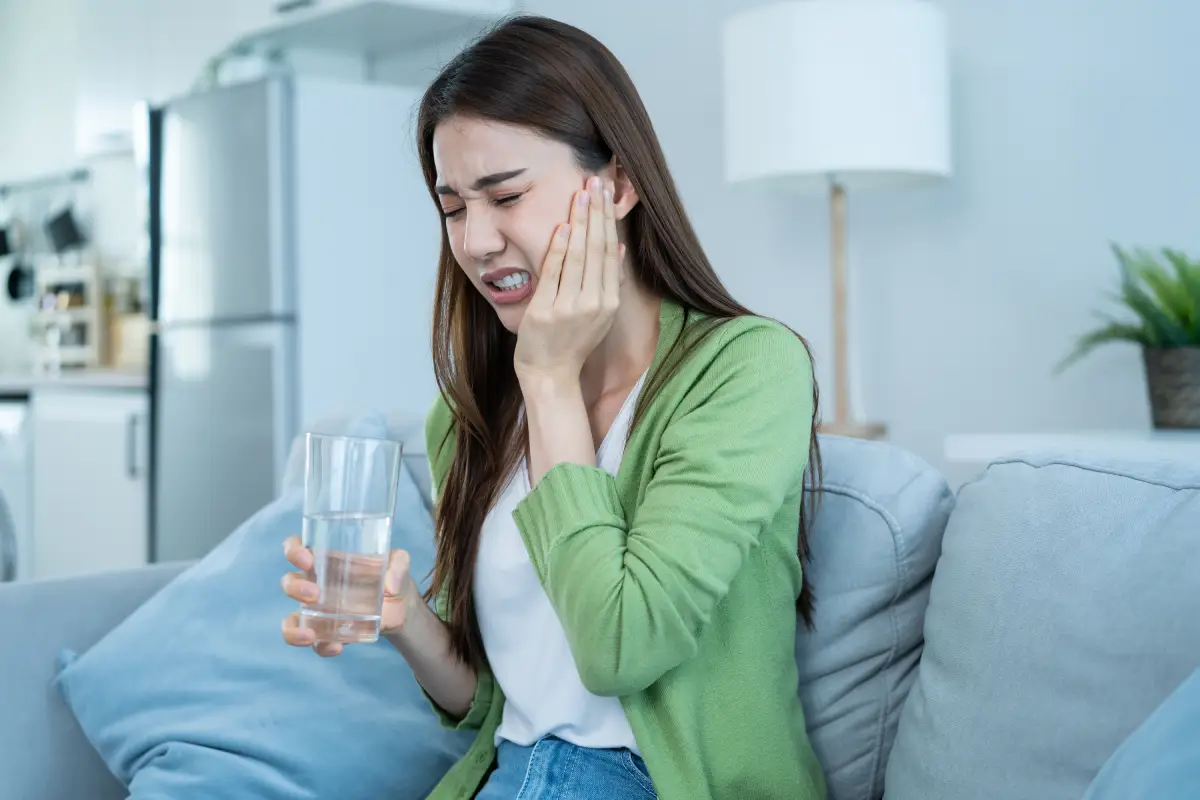
Taking a sip of ice water or a cold drink should not make your teeth hurt. If you regularly feel a sharp jolt when something cold touches your teeth, there may be an underlying reason for the sensitivity.
Sometimes the cause is minor, such as temporary irritation or exposed dentin. In other cases, cold sensitivity can point to tooth decay, a crack, gum recession, or irritation inside the tooth. Paying attention to when the pain happens and how long it lasts can provide useful clues.
Why Do Cold Drinks Make My Teeth Hurt?
Healthy teeth have protective layers that help shield the inner nerves from temperature changes. When that protection becomes thinner or compromised, cold temperatures can reach sensitive areas more easily.
Dentin is the layer beneath tooth enamel. It contains tiny pathways that connect toward the nerve inside the tooth. When dentin becomes exposed, cold liquids can trigger a quick, sharp sensation.
This can happen for several reasons, including:
Enamel Wear
Enamel can gradually wear down from aggressive brushing, acidic foods and drinks, or other factors. As the protective layer becomes thinner, your teeth may become more sensitive to cold.
Gum Recession
When gum tissue pulls away from a tooth, part of the root may become exposed. Roots do not have the same enamel protection as the visible part of a tooth, which can make them particularly sensitive to cold drinks.
Tooth Decay
A cavity can cause sensitivity when it progresses through the enamel and reaches deeper layers of the tooth. Cold sensitivity may be one of the earlier signs that decay needs attention.
Cracks or Damage
A cracked tooth can react strongly to cold. You may also notice pain when chewing or biting, although symptoms can vary depending on the location and severity of the crack.
Irritation Inside the Tooth
The tissue inside a tooth contains nerves and blood vessels. Deep decay, trauma, repeated dental procedures, or other irritation can affect this tissue and cause stronger sensitivity.
If you are not sure what is causing your symptoms, a dental professional can examine the tooth and surrounding tissues to determine what may be contributing to the sensitivity.
Why Does the Pain Last Longer for Some People?
Pay attention to how long the discomfort lasts after the cold drink is gone.
A quick sensation that disappears almost immediately may have a different cause from pain that continues for several seconds or longer. Lingering pain can sometimes indicate that the tissue inside the tooth is more irritated.
The location matters too. If one specific tooth consistently hurts when you drink something cold, it is worth having that tooth examined. If several teeth react at the same time, factors such as enamel wear, gum recession, or generalized sensitivity may be involved.
An oral health specialist can look at these patterns along with your dental history to help determine the most likely cause.
Should You Stop Drinking Cold Drinks?
You do not necessarily need to avoid every cold drink. However, if cold temperatures repeatedly cause pain, changing how you consume them may make the discomfort easier to manage while you determine the cause.
Try drinking through a straw when appropriate, avoid holding cold liquids against your teeth, and use a toothbrush with soft bristles. You may also benefit from a toothpaste designed for sensitive teeth.
These steps can reduce discomfort, but they do not address problems such as decay, cracks, or inflammation inside a tooth.
When Should Cold Sensitivity Be Checked?
Occasional sensitivity may not indicate a serious problem, but persistent or worsening pain deserves attention. Make an appointment if the sensitivity keeps returning, becomes stronger, lasts after the cold stimulus is gone, or occurs along with toothache, swelling, discoloration, or pain when biting.
A tooth that suddenly becomes very sensitive to cold should also be checked, particularly if the symptom affects only one tooth.
Get to the Bottom of Cold Sensitivity
Cold sensitivity can have a simple explanation, but recurring pain should not be something you simply learn to live with. Identifying the cause can help prevent a small problem from becoming more complicated.
If cold drinks consistently make your teeth hurt, schedule an appointment to have the affected teeth examined.
Aloha Dental in Las Vegas can help determine what may be causing your sensitivity.
Frequently Asked Questions
1. Why do my teeth hurt when I drink ice water?
Ice water can trigger sensitivity when dentin or tooth roots are exposed. Decay, enamel wear, gum recession, cracks, and irritation inside the tooth can also cause cold sensitivity.
2. Why does only one tooth hurt when I drink something cold?
Sensitivity limited to one tooth can sometimes be associated with decay, a crack, a damaged restoration, or irritation inside that tooth.
3. Is tooth sensitivity to cold always a cavity?
No. Cold sensitivity can have several causes, including gum recession, enamel wear, exposed roots, cracks, and irritation inside the tooth.
4. How can I reduce tooth sensitivity to cold?
Using a soft bristled toothbrush, avoiding aggressive brushing, and using toothpaste formulated for sensitive teeth may help reduce discomfort. Persistent sensitivity should still be evaluated.